Description
RIT’s Self-Rescue System is designed for professionals working at height who require a dependable, easy-to-use escape solution in elevated environments. Certified to ANSI/ASSP Z359.9 to 630 feet, the system meets the latest temperature-rise requirements, ensuring that any point the user touches on the descender does not exceed 118°F during descent.
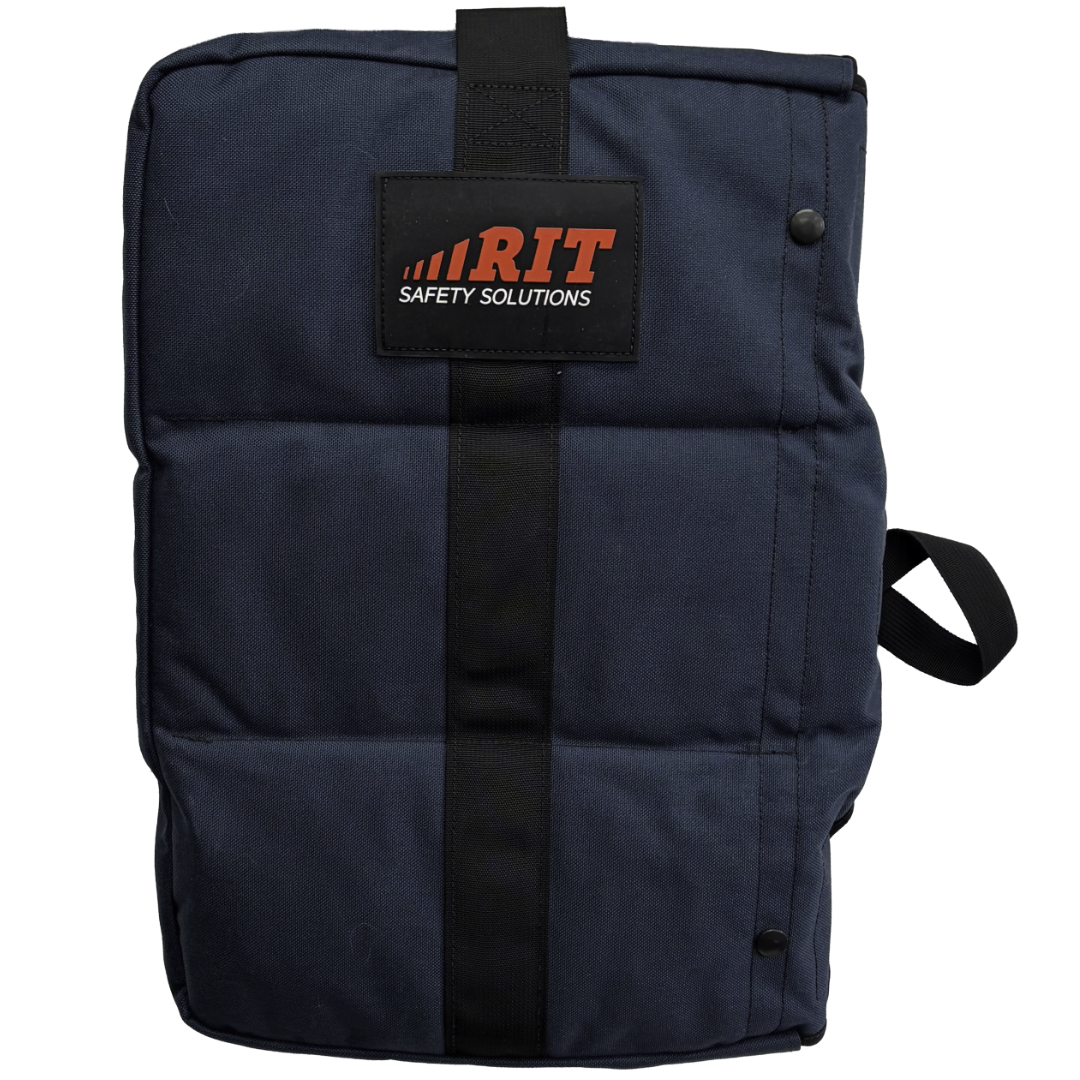
This is a non–weight-bearing system, eliminating the need to open or re-rig the device to change configurations. Users can move horizontally to an egress point and take up slack when needed, then transition directly into descent. An auto-locking descender with panic braking provides controlled lowering, while the backpack-style deployment adds resistance if the escape line is released or dropped.
The system allows for a smooth transition over edges without requiring the user to place a hand beneath the device or descend backward. This improves stability and control when exiting elevated structures where footing and visibility may be limited.
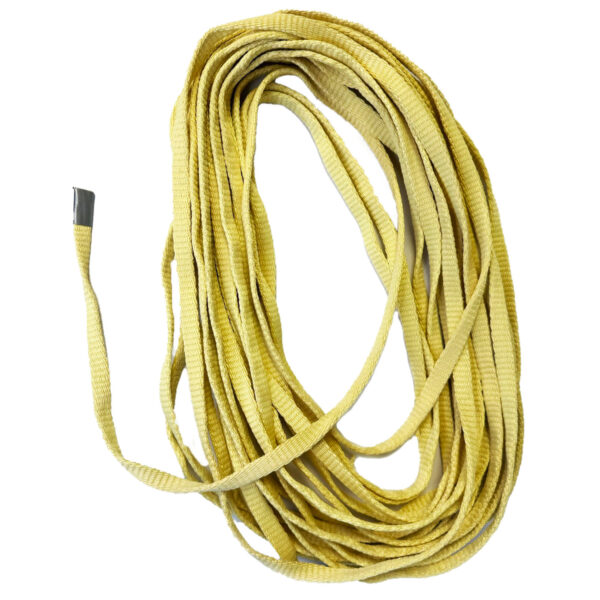
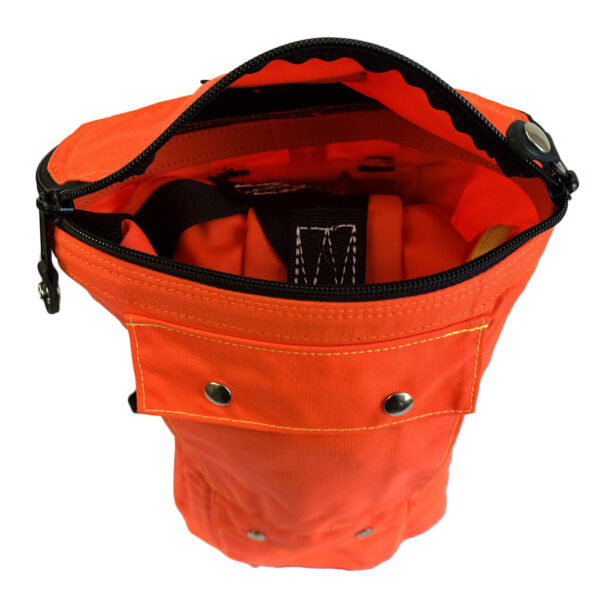
For minimal bulk and reduced fatigue, the escape line is constructed from 7/16-inch tubular Kevlar webbing, which weighs less than traditional rope and stows neatly in a compact escape pack. The system is integrated with the worker’s harness, distributing weight across the shoulders and waist to prevent snagging and eliminate repeated impact against the legs. While the backpack can be removed, it requires deliberate effort to ensure it cannot detach unintentionally during work.
Compatible with any harness on the market, the Self-Rescue System can be configured to fit existing PPE programs without requiring specialized equipment.
The system is 100% fire-rated and conforms to NFPA 2500 (2021). It is rated to withstand 400°C for over 30 minutes and 600°C for one minute with a 300-pound load, providing an added margin of safety in high-heat environments.
In addition to self-evacuation, the system is capable of assisted rescue, allowing an injured worker to be lowered safely. When paired with an assisted rescue configuration, connection points can be reversed to belay the worker under controlled descent.